Exhibition
125 years of Mosaic
The story so far...
A Story of a Short Life by Juliana Horatia Ewing
The Book That Sparked a Movement

A Story of a Short Life tells of a boy who, after becoming disabled, learns to live with courage, kindness, and purpose. It was a compassionate and forward-thinking portrayal of childhood disability.
Moved by its message, and by the deep loneliness Sister Carroll witnessed amongst Leicester’s disabled people, she gathered a small group to share this story and some tea. That simple act of kindness became the spark that ignited the founding of the Guild. This book and act are a symbol of how empathy, storytelling, and human connection can grow into something transformative.
Arthur Grove’s Badge
A Symbol of Humility and Quiet Determination

This shield-shaped badge belonged to Arthur Groves, founder of the Guild. The front bears the Guild’s initials and part of its original emblem, a dragon symbolising strength and resilience. On the reverse, Arthur Grove’s name and the date July 1909 are stamped.
In the early 1900s, badges like this were worn with pride by officers, volunteers, and members, symbolising their commitment to the Guild’s mission of dignity, care, and community. This badge serves as a rare and personal artefact of the man whose compassion inspired over a century of social good in Leicester.
Windows from the Guild Hall
Light Through the Glass

These two stained glass window panes once adorned the Guild Hall. A space built in 1909. Removed during later renovations, they remain beautiful fragments of a building that offered sanctuary, celebration, and solidarity.
The Hall was a home for concerts, services, classes, and companionship. These windows once filtered sunlight onto gatherings of people whose lives were often lived in the shadows of exclusion. Their coloured light brightened not just the room, but the spirits of those within it.
Crafted with care, today, they symbolise the light the Guild brought into people’s lives—through creativity, community, and care.
A Model of Care:
The 1920s Spinal Carriage

This scale model represents a child’s spinal carriage from the 1920s. An essential lifeline for many disabled Guild members. These specially designed chairs allowed people who were permanently bedridden to attend Guild events, socialise, worship, and experience the outside world.
The model was created by artist Tim Neath, working mainly with recycled cardboard and other plain materials such as string, wood and paper. Tim built this piece with direction from the Science Museum’s collection in Wiltshire, using period-appropriate references and scale dimensions to bring a near-forgotten technology to life.
Though simple in structure, the spinal carriage symbolised freedom, visibility, and dignity for those too often excluded from public life. For many, it was the first step out of isolation and into community.
This replica invites us to reflect on the past ingenuity and compassion that helped disabled people live fuller, more connected lives.
Voices from The Guild: A Living Archive in Sound


This audio exhibit brings the past to life. Each person you’ll hear reads a first-hand account, words once written by disabled members of the Guild from as early as 1900. These moving scripts tell stories of hardship, hope, and transformation: a child bedridden but still knitting for others, a man rebuilding life after losing limbs, a girl who rediscovers joy through community. Every voice echoes the same powerful theme, what it meant to belong to the Guild. Spoken by colleagues at Mosaic 1898 today, these accounts remind us that the past isn’t distant. It lives on in the values, work, and people of our present. Please take a moment to listen. These aren’t just stories, these are legacies, and the voices reading them are part of that unbroken chain of care and courage.
Plaques from the Guild’s Past
Signs of the Times

These original plaques once hung outside the buildings and rooms that formed the heart of the Guild’s work. Each one marks a moment in time. Together, these signs are more than relics, they are milestones in the evolving story of disability, inclusion, and identity. They remind us how far we’ve come. and how language, care, and community shape one another through time.
Historic Annual Reports of the Guild
Ledgers of Hope and Chronicles of Change
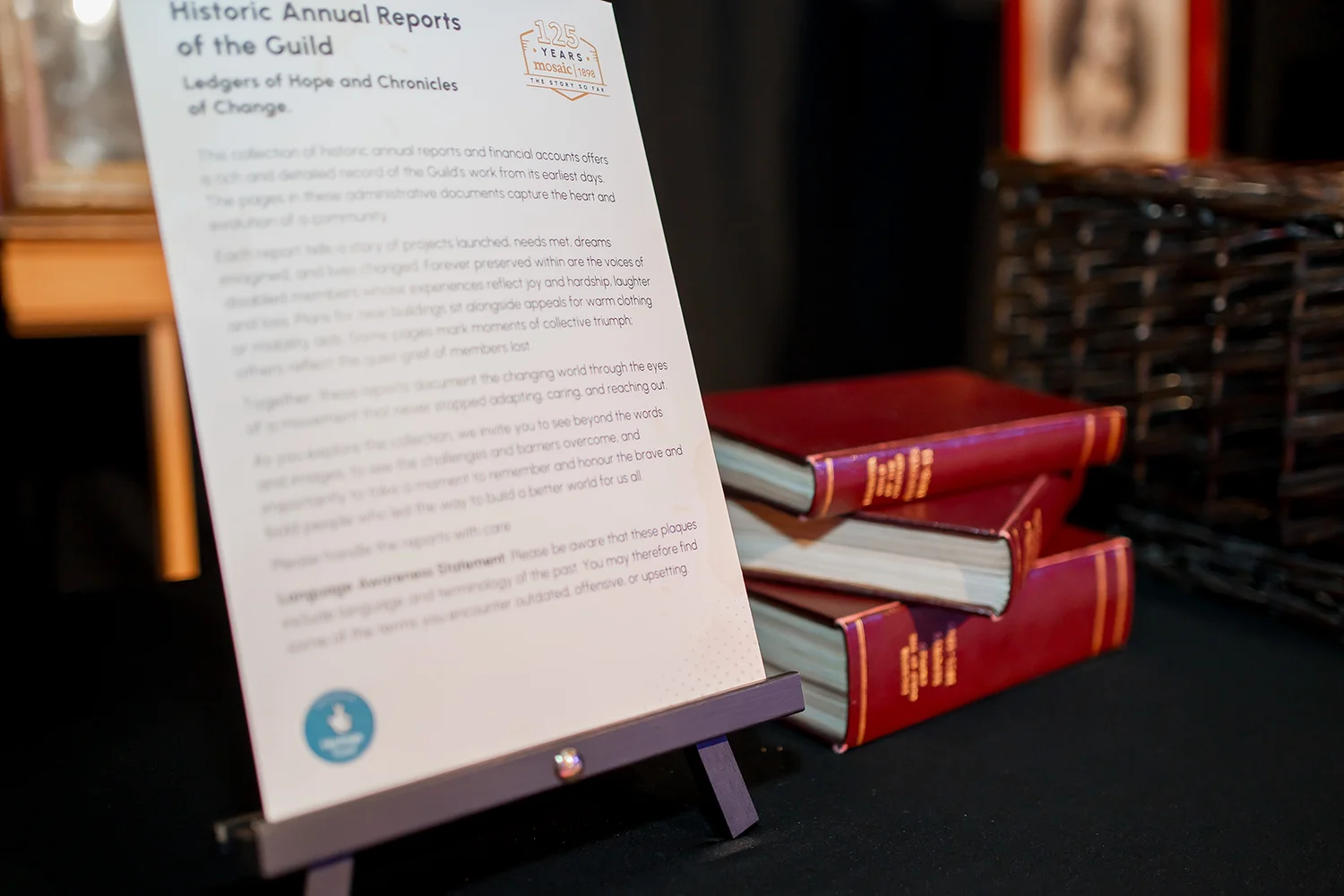
This collection of historic annual reports and financial accounts offers a rich and detailed record of the Guild’s work from its earliest days. The pages in these administrative documents capture the heart and evolution of a community.
Each report tells a story of projects launched, needs met, dreams imagined, and lives changed. Forever preserved within are the voices of disabled members whose experiences reflect joy and hardship, laughter and loss. Plans for new buildings sit alongside appeals for warm clothing or mobility aids. Some pages mark moments of collective triumph; others reflect the quiet grief of members lost.
Together, these reports document the changing world through the eyes of a movement that never stopped adapting, caring, and reaching out.
Letters from the Postman’s bag


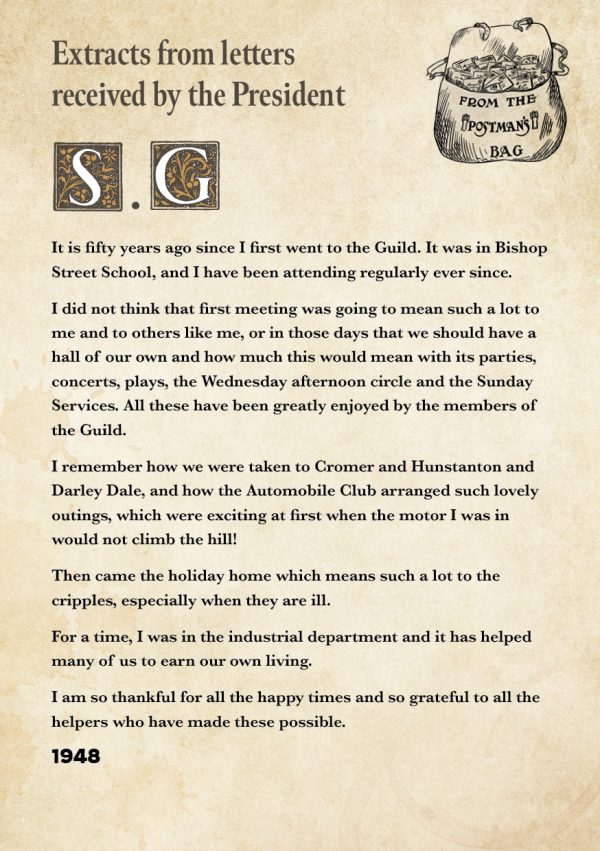


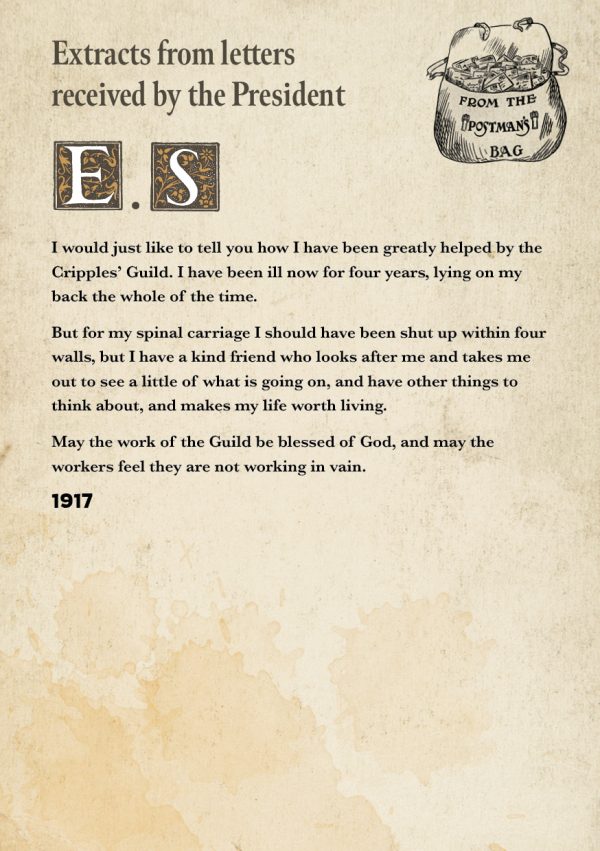


The A-Z of guild members: Lives of Strength and Spirit
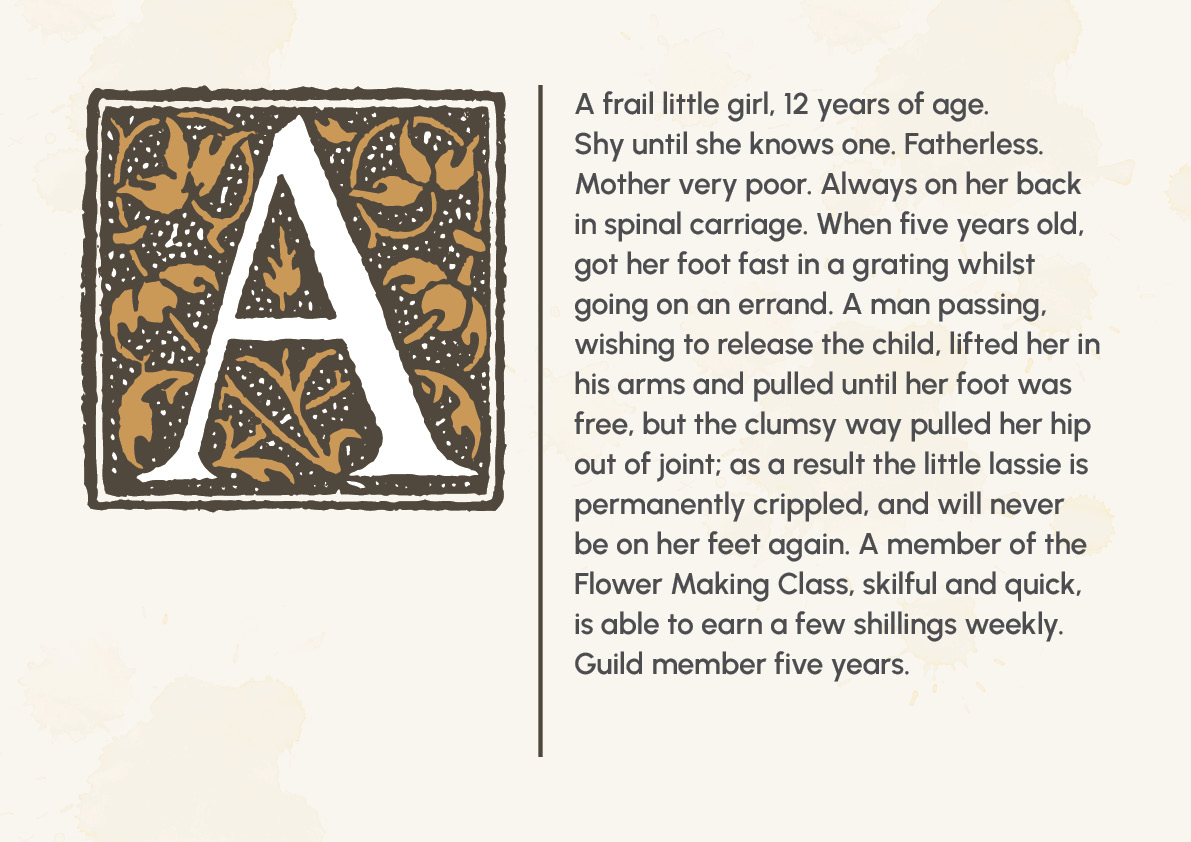


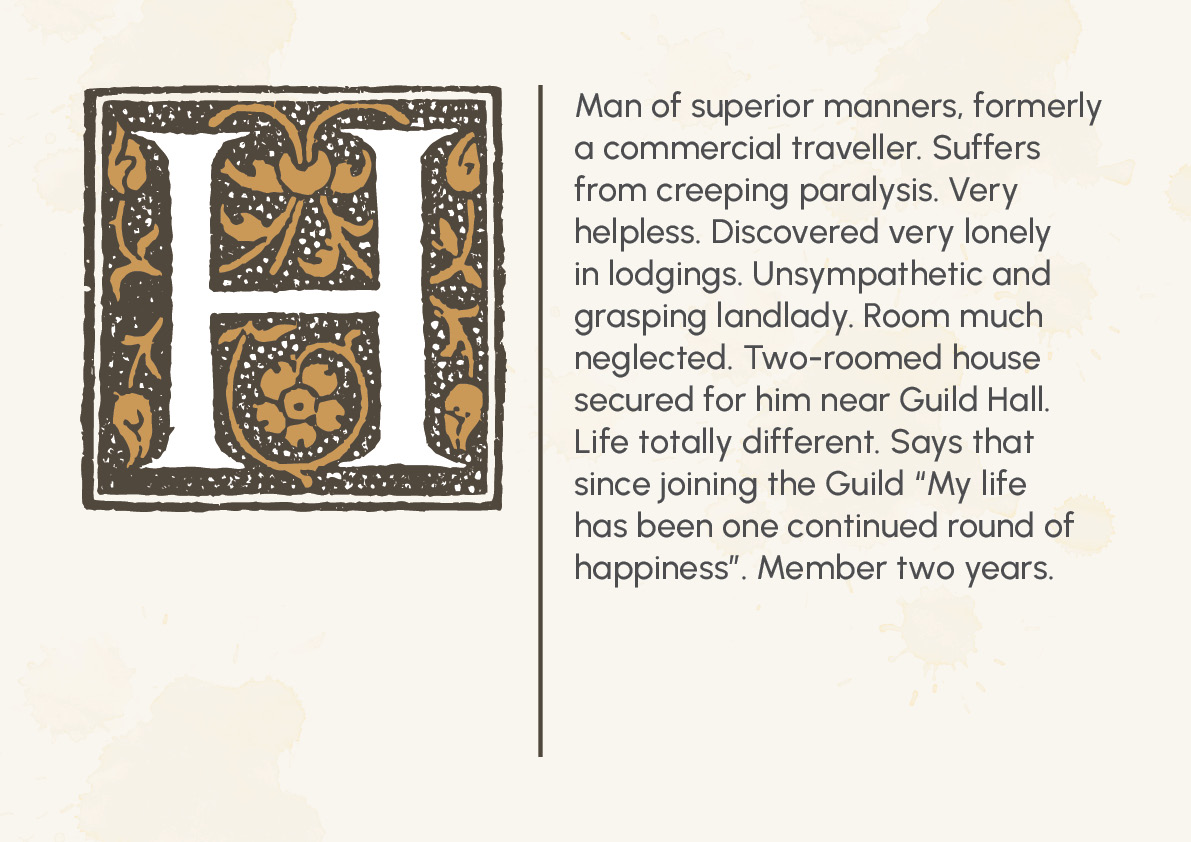


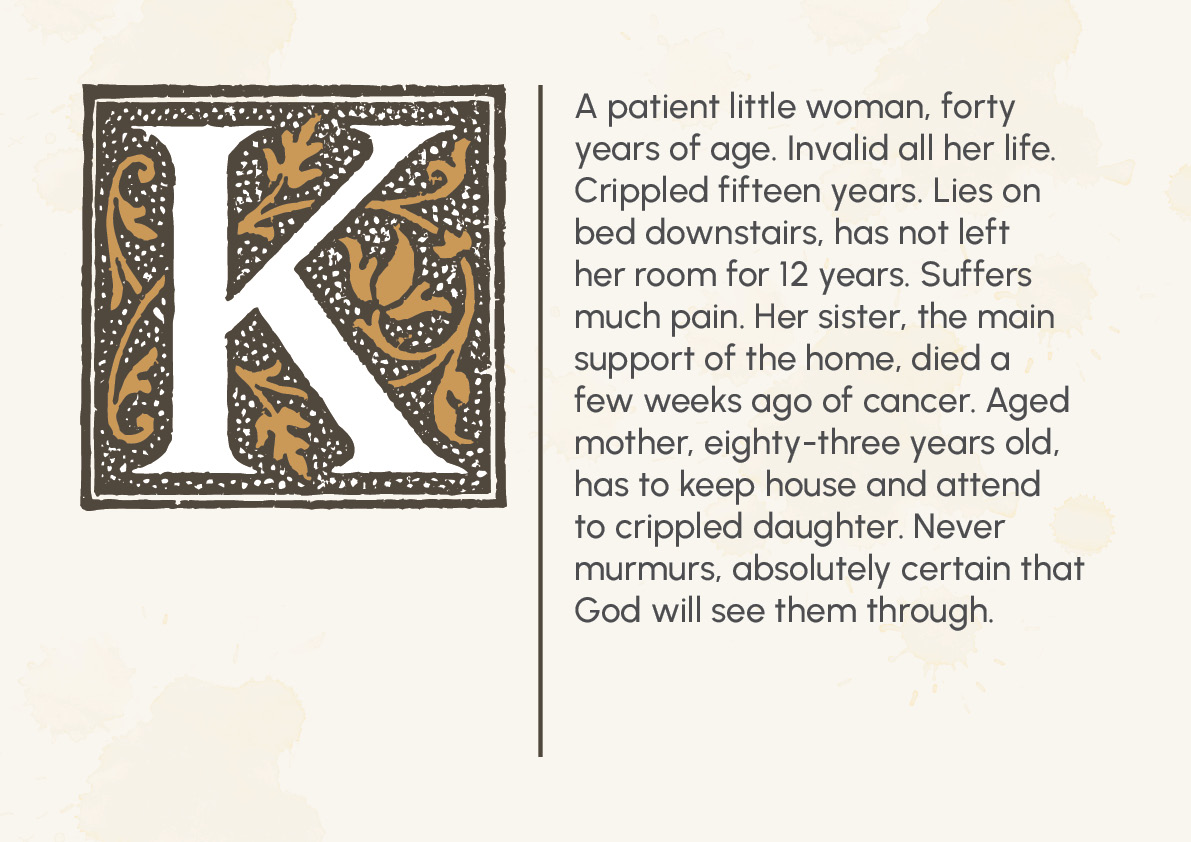


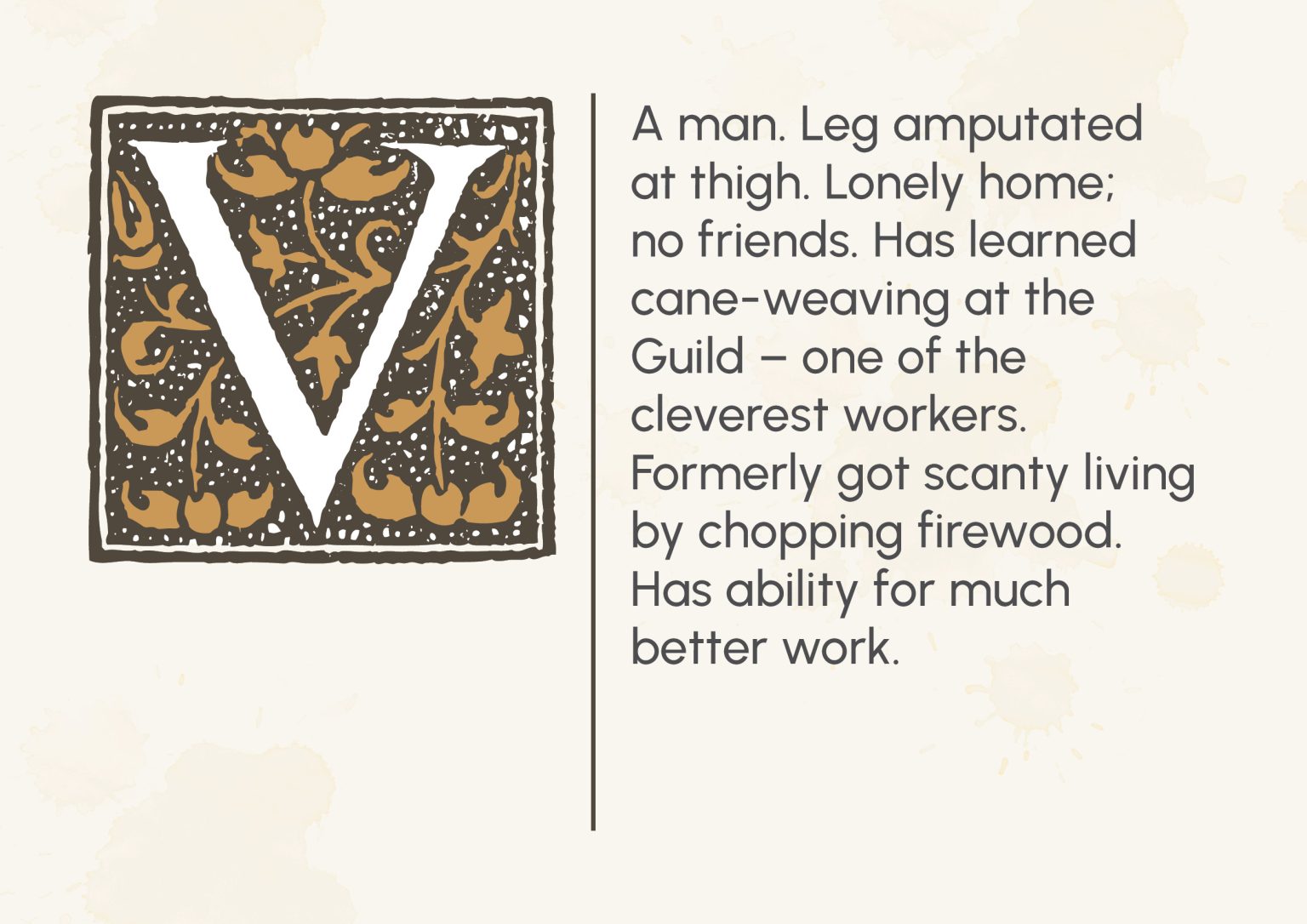


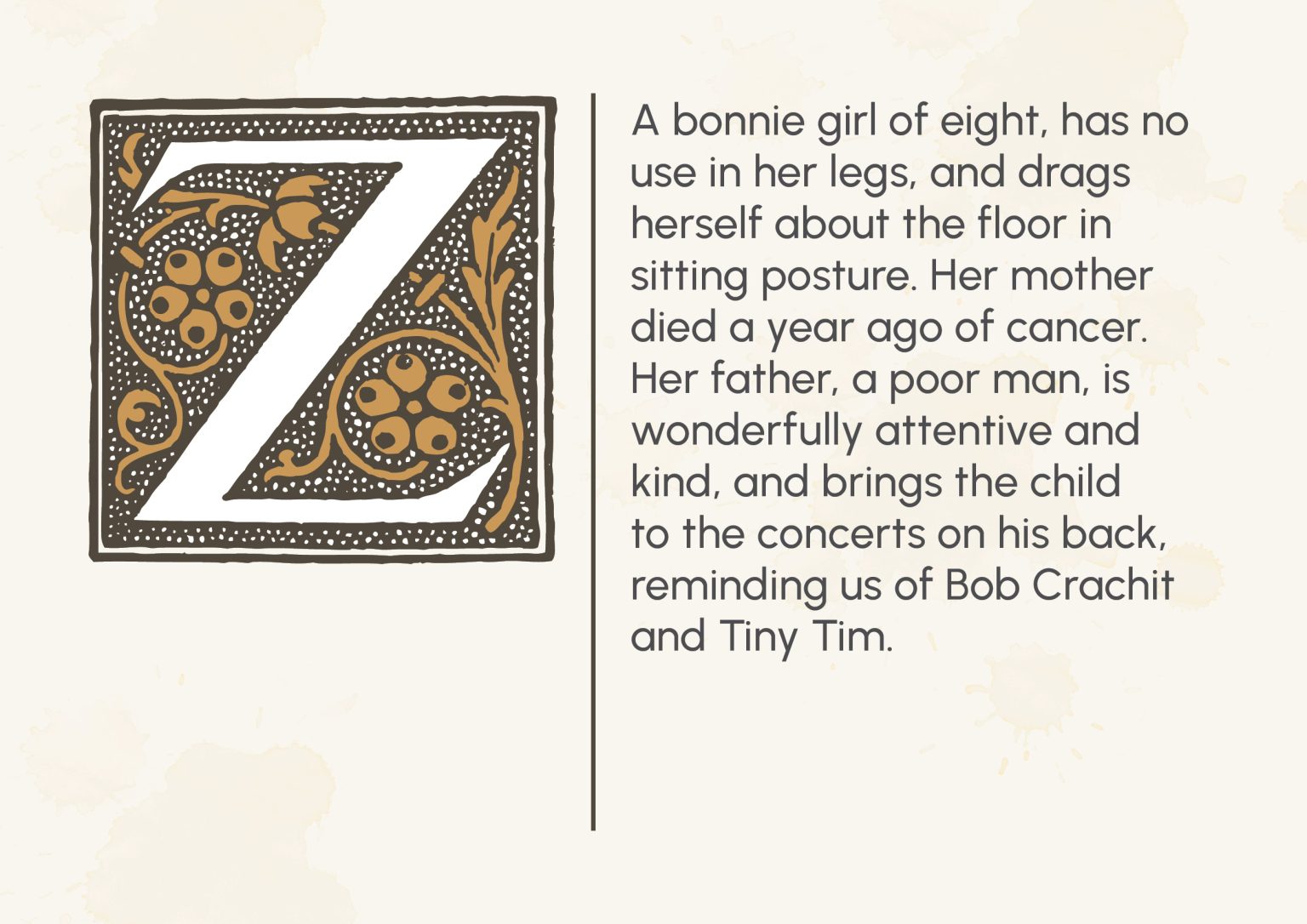
This display brings to life the powerful, untold stories of disabled Guild members from over a century ago. Drawn from original case notes, each vignette shares the daily realities, hardships, and remarkable resilience of disabled people who found community, purpose, and dignity through the Guild. From children living with painful bone disease to adults permanently injured at work or through cruelty, these voices reveal not only suffering but also enduring humour, creativity, and mutual support. As you explore this alphabet of lives, we invite you to reflect on how far we’ve come, how much still needs to be done, and above all, to honour the courage and humanity of these extraordinary people.
Silent Video: A Moving Record of Determination


This rare silent film offers a powerful glimpse into the lives of disabled people in 1930s Leicester. It captures the extraordinary effort required to make simple day trips possible, decades before accessible transport or wheelchairs were commonplace. Flat-bed lorries and private motorcars were repurposed to carry members to generous hosts’ homes in Welby, Scraptoft, and Knighton. In good company, brass bands, conjurers, and dancing girls added a festive spirit. This charming archive footage is a moving record of determination, solidarity, and joy at a time when disabled people were often hidden from view. The film shows what compassion looked like before rights and infrastructure caught up. These images remind us that access is not a modern invention, it has always been fought for, created, and cherished by communities who refused to be left behind.
https://player.bfi.org.uk/free/film/watch-leicester-guild-of-the-crippled-some-events-of-1930-1930-online